 Uncensored
 WildOwl
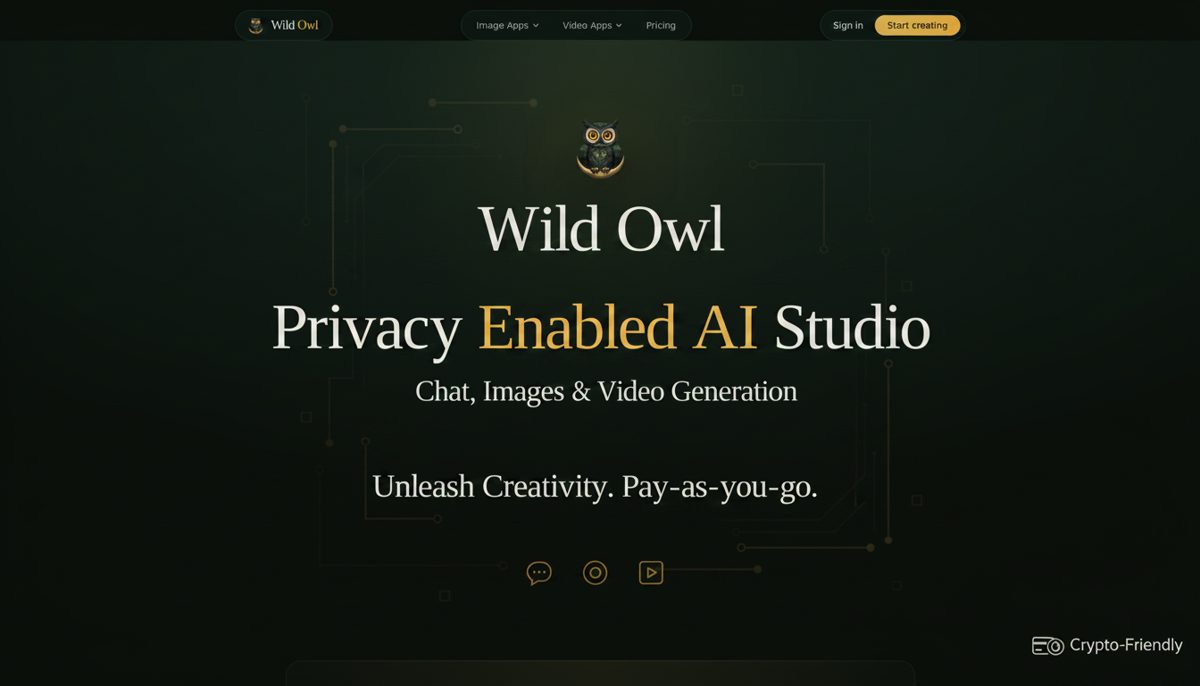
Multi-model creative engine with pay-as-you-go access to leading permissive generators.
Provisional score. Built from documented features, current pricing, published reviews. Full bench run on a paid account is queued. Score will move; we'll log the delta here.
Verdict
WildOwl.ai delivers a practical, credit-funded gateway to top-tier image and video models without the subscription trap. The trade is clear: you gain freedom and flexibility, but you must bring model literacy and prompt discipline.
Wins
- Multiple leading models under one roof
- Pay-as-you-go avoids subscription fatigue
- Permissive policy with fewer false refusals
Loses
- No free tier for pre-purchase testing
- Model selection burden falls on the user
- New users face a learning curve
What it is
WildOwl.ai is a hosted creative platform that bundles access to several leading AI image and video models into a single web interface. The tool provides Wan 2.7, Qwen Image 2, Flux 2, and Seedream/Seedance systems without requiring local installation or technical pipeline setup. It targets creators who want permissive generation capabilities across fantasy, horror, fashion, cinematic, and mature themes without navigating multiple subscriptions or wrestling with tools like ComfyUI.
The platform handles image generation, video generation, editing, and upscaling in one workflow. There is no chat function. There is no memory system. The focus is narrow and deliberate: visual output.
Realism
The realism score sits at 9, driven by model variety rather than a single engine. Flux 2 handles photorealistic portraits and fashion work with particular strength. Wan 2.7 manages complex scenes where subject, pose, lighting, and mood must coexist in one frame. Qwen Image 2 steps forward for text-heavy visuals and poster work where precise prompt adherence matters more than organic texture.
This is not a one-model-fits-all system. The realism you achieve depends on matching the right model to the right task. The platform provides the hardware; the operator provides the judgment.
Prompt control
Control scores at 7. Reference-based generation exists for character and product consistency. Pose, outfit, and style direction are manageable when the user understands which model responds to which type of instruction. The reviewers did not cover advanced inpainting masks, regional prompting, or control-net equivalents. What exists is functional but not deep.
The burden is on the user. Prompt quality and settings selection directly determine output quality. The platform does not rescue weak prompts.
Consistency
Consistency also scores 7. Character and product consistency are supported through reference-based generation and editing tools. The reviewers note that output quality depends on model choice, prompt quality, and settings. This is a conditional score: the tools are present, but the results are not automatic.
For AI influencer creators, this is workable but not effortless. You will need to build workflow discipline around reference images and model selection to maintain visual coherence across sessions.
Video
Video scores at 8. The platform supports image-to-video workflows and Seedance-style models for what the source describes as “high energy motion based creative assets.” This bridges still generation into social video content without exporting to a separate tool.
The reviewers did not cover maximum video length, frame rate options, or motion control granularity. What is confirmed is the pipeline exists and functions within the same interface as the image tools.
Freedom
Freedom scores at 8.3, a composite of explicit_allowed (8), filter_false_positives (8), and content_range (9). The platform is explicitly designed to avoid treating “every edgy idea like a violation” and to stop “flattening bold creative ideas into generic safe images.” Fantasy, horror, sci-fi, fashion, satire, character design, mature storytelling, cinematic scenes, dark aesthetics, experimental art, and ad creative testing are all within scope.
The boundary is clear: illegal, non-consensual, exploitative, and harmful content remain blocked. This is permissive within lawful creative work, not lawless.
Usability and platform
Usability scores at 7. The web interface is described as “easier than local tools like ComfyUI” with simplified workflow and no “tool hopping.” Reliability scores lower at 6, reflecting that “new users may need a little experimentation to find their best workflow” and must “choose the right model for each job.”
There are no mobile apps. There is no free tier. The platform is web-only, hosted, and requires no technical setup. Privacy and anonymity details were not covered by the reviewers.
Cost per month
Value scores at 4.3, the lowest of the site scores. This reflects the credit-based system with no unlimited plan and no free tier. Pricing is pay-as-you-go with no mandatory subscription. The entry_price score of 7 acknowledges that this suits “burst creators” who generate intensely then pause for weeks, eliminating subscription fatigue.
The reviewers did not disclose specific credit prices or minimum purchase amounts. The unlimited_vs_credits score of 6 confirms no unlimited plan was mentioned. For heavy continuous users, costs may accumulate quickly. For intermittent project work, the structure is defensible.
Best and worst use
Best use: AI influencer creators needing consistent character visuals; marketers and agencies creating bold ad campaigns; digital artists exploring mature or dark fantasy themes; video creators requiring image-to-video pipeline; project-based creators avoiding monthly subscriptions.
Worst use: Users seeking completely free generation without payment; privacy-first users wanting minimal data retention; technical users wanting full local control over pipelines.
What other reviewers say
- Best uncensored AI image generator in 2026 for combining permissive access with leading models.
- Wan 2.7 excels at complex prompts with multiple details like subject, pose, lighting, and mood.
- Qwen Image 2 strongest for text-heavy visuals, posters, and precise prompt adherence.
- Flux 2 preferred for photorealistic portraits, fashion, and professional visual assets.
- Seedream and Seedance models bridge still images to motion for social video content.
- Pay-as-you-go pricing suits freelancers and agencies with project-based generation patterns.
- Eliminates subscription fatigue for creators who generate intensely then pause for weeks.
- Easier entry point than ComfyUI while offering comparable model access.
Detailed scorecard
| Dimension | Score | Evidence |
|---|---|---|
| Image quality | 9/10 | Described as using ‘leading image models’ and ‘current generation systems’ with strong prompt adherence, particularly Wan 2.7 for complex scenes and Flux 2 for photorealism (outreachz.com) |
| Image consistency | 7/10 | Reference-based generation and editing supported for character and product consistency, though output quality ‘depends on model choice, prompt quality, and settings’ (outreachz.com) |
| Video | 8/10 | Image-to-video workflows and Seedance style models for ‘high energy motion based creative assets’ supported in one platform (outreachz.com) |
| Appearance control | 7/10 | Multiple models offer different creative personalities; reference-based generation helps with pose, outfit, and style direction (outreachz.com) |
| Explicit allowed | 8/10 | ‘Permissive’ platform with ‘broader creative freedom’ and ‘fewer unnecessary refusals’ for mature themes, though still blocks illegal and harmful content (outreachz.com) |
| Filter false positives | 8/10 | Explicitly designed to avoid treating ‘every edgy idea like a violation’ and ‘flattening bold creative ideas into generic safe images’ (outreachz.com) |
| Content range | 9/10 | Supports fantasy, horror, sci-fi, fashion, satire, character design, mature storytelling, cinematic scenes, dark aesthetics, experimental art, and ad creative testing (outreachz.com) |
| Web app | 8/10 | Hosted platform ‘easier than local tools like ComfyUI’ with simplified workflow without ‘tool hopping’ (outreachz.com) |
| Reliability | 6/10 | ‘New users may need a little experimentation to find their best workflow’ and users must ‘choose the right model for each job’ (outreachz.com) |
| Free tier | 0/10 | No free tier mentioned; pay-as-you-go credits are the entry point (outreachz.com) |
| Entry price | 7/10 | Pay-as-you-go pricing with ‘no subscription lock in’ praised as practical for burst creators, though no specific credit price disclosed (outreachz.com) |
| Unlimited vs credits | 6/10 | Credit-based system; no unlimited plan mentioned, but avoids subscription fatigue for inconsistent usage patterns (outreachz.com) |
Scores are drawn from documented features and published third-party reviews; hands-on retests are scheduled and logged here when they land.
Pricing
| Plan | Price |
|---|---|
| Pay-as-you-go credits | |
| No mandatory subscription |
Compare and swap
What each reading means
- Realism (22%)
- Skin, hands, lighting and anatomy on the same prompt set. Photoreal when asked, stylised when asked.
- Prompt control (17%)
- How much of the result you steer: model choice, reference images, LoRAs, negative prompts, seeds, inpainting.
- Consistency (15%)
- Same subject, four scenes, then video. Does the face, body and styling survive, or does each render produce a stranger?
- Freedom (18%)
- What the tool lets you make. Explicit content on by default, opt-in, or blocked, and how often moderation false-positives.
- Video (10%)
- Whether it does video at all, clip length, motion quality, and whether video is explicit-capable.
- Usability (6%)
- Time from sign-up to first good output, queue times, and whether the interface gets in the way.
- Value (12%)
- What a month of real use costs against what you get: credits, unlimited tiers, watermarks and free allowance.